
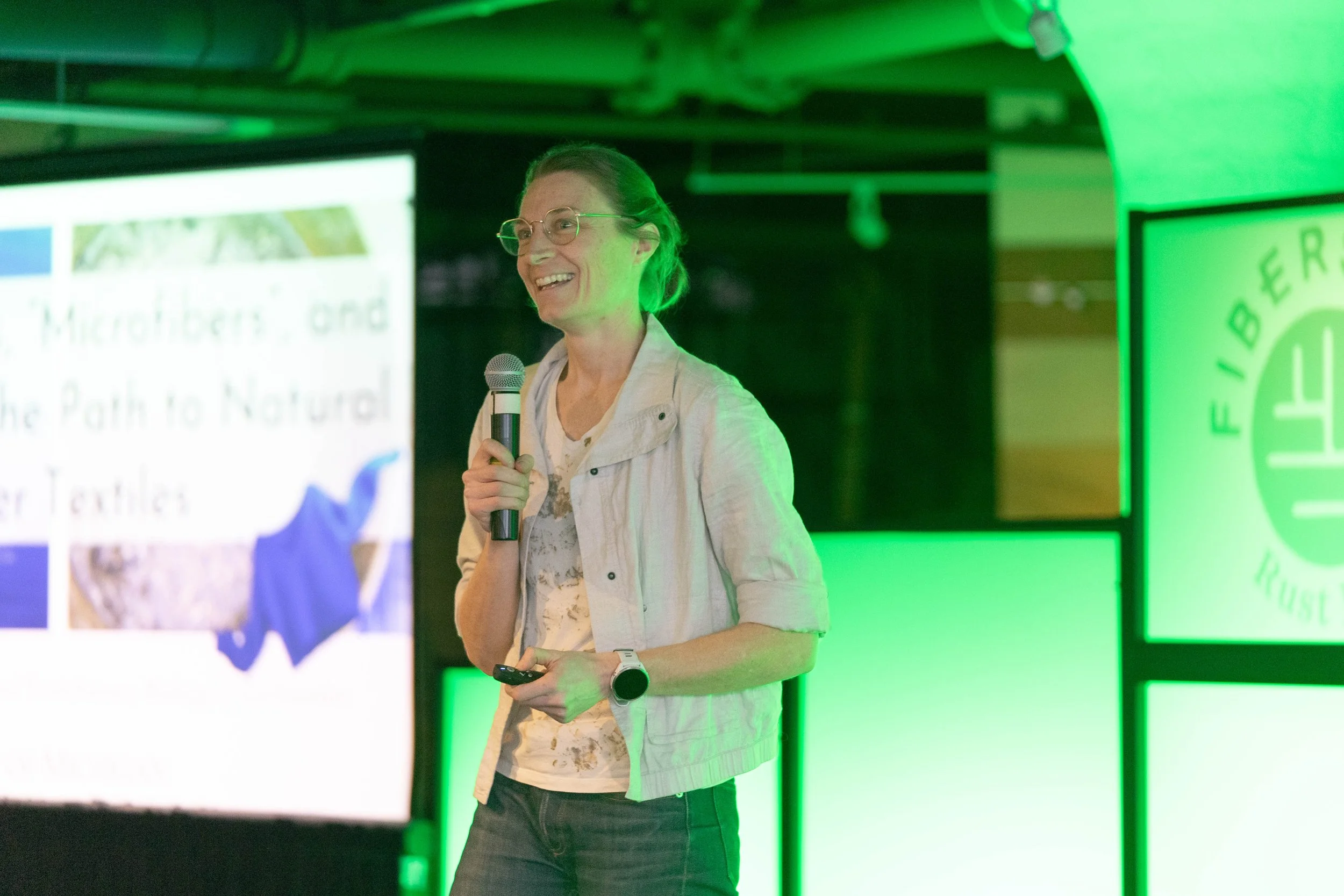
Melinda DuHaime, speaking at the 2025 symposium about textiles and microplastics
Saturday Morning is the main event!
The Main Event! January 24 (morning speaker audio/slides available with a virtual ticket)
Registration begins bright and early at 8:15 am on Saturday morning at the beautiful 78th Street Studios in Cleveland. Come early and mingle! Opening begins at 8:50.
Saturday morning, January 24th, kicks off with introducing a wide array of speakers who all play a part in a regional soil-to-soil textile system! Learn from community leaders in the fields of fiber farming, research, student-involvement, prototyping, manufacturing, design, building, creativity, upcycling, and more.
While we could have chosen to spend the morning digging in deep with a couple of speakers over a narrow subject related to regional textiles, we listened to feedback from the last two years: you all have expressed you enjoy more speakers for shorter time blocks. We opted to invite all of the following speakers to share their experience, passions, and dreams with you in these shorter time blocks again this year, just like the last two years!
For those who haven’t come to the morning speaker series before: It will be a little like going out to dinner and ordering all small plates or appetizers instead of one huge entree— and we’re so excited and honored to have such wonderful engagement from our talented and passionate speakers.
Morning speaker series will be followed by:
the Cohort 3 One Year, One Outfit fashion show
snacks and connection time before heading upstairs for the clothing swap, seed swap, learning demos, vendors, and more!
For full weekend agenda and details, please see the main symposium page.
Doors open at 8:15! Come early, find a seat, grab a tea or coffee and a pastry.

Margaret Sankey / Opening Performance
Leave it to Margy and friends to opening our event with collaborative spirit!
Jason Spargo / Sue Spargo & Co. / Community Embroidery
Jason heads the Dye Studio at Sue Spargo's. He is Sue’s son and has been with the business since 2013 and has been dyeing for over twenty years, specializing in wool dyeing- but he never misses an opportunity to try a new method on a new material!
Jason will briefly share about the community embroidery we’ll be doing throughout the morning speaker series and some more info on Sue Spargo & Co!
Instagram: @suespargo
Website: https://www.suespargo.com/
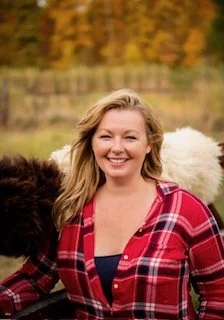
Bethany Cantwell/ Aurora Blue Farm/
Oxford, OH
Bethany Cantwell will share how sustainable agriculture, soil health, and animal well-being are inseparable from the textiles we create, blending traditional shepherding practices with modern stewardship. Bethany shows how fiber becomes a tangible expression of care for ecosystems, for craft, and for the future we are tending together.
About Bethany: Bethany Cantwell is a shepherdess in southwest Ohio, raising a mixed flock of Icelandic and Jacob sheep for both fiber and meat. She teaches natural methods of sheepskin tanning and creates felted fleeces, yarn and other products from her flock’s wool.
Instagram: @aurorabluefarmohio
Website: www.aurorabluefarm.net
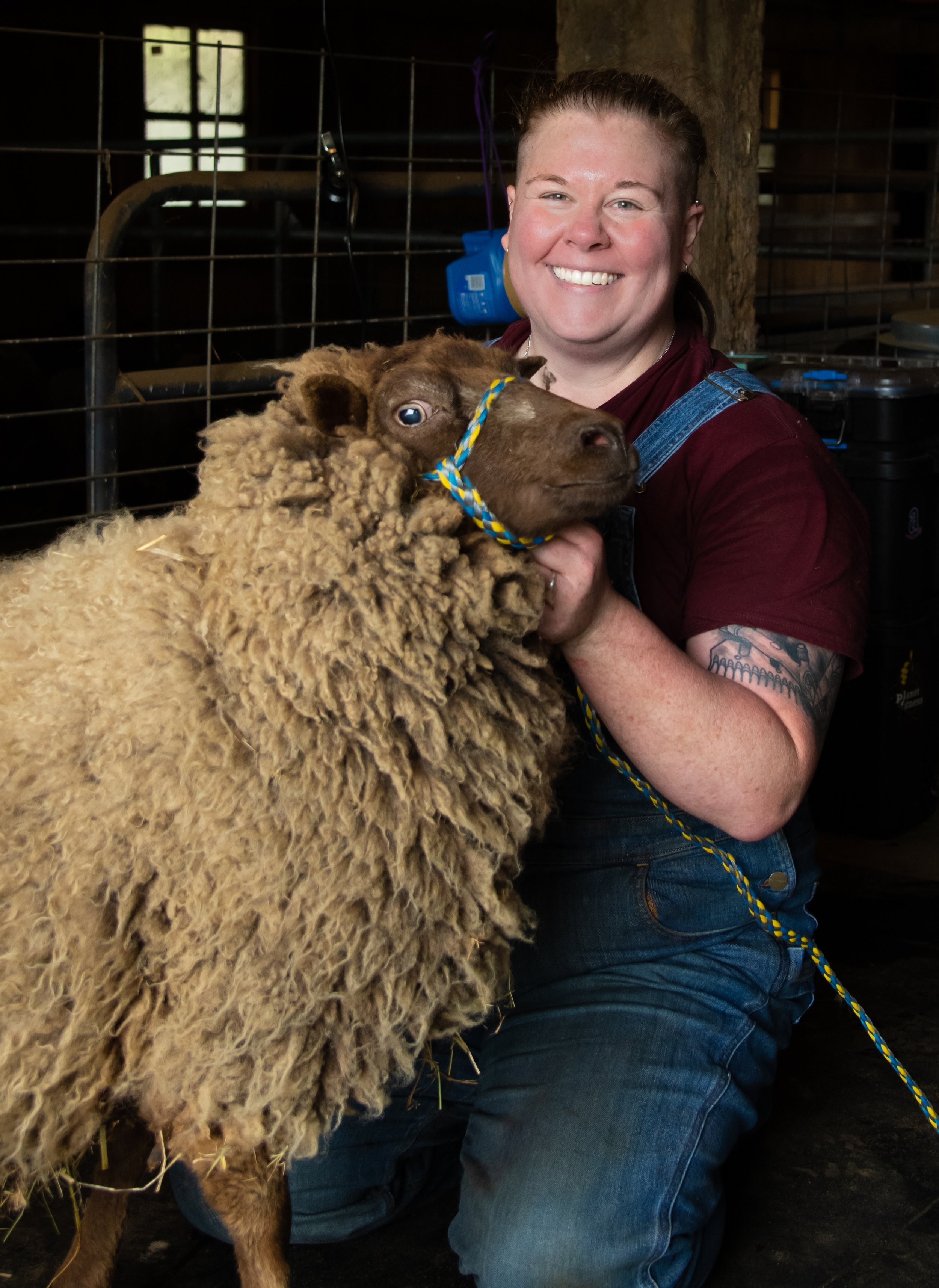
Melinda Wamsley / Boss Mare Shearing /
Washington County, PA
You may have met Melinda at our sheep-shearing demo last year! Melinda will be sharing about wool from the perspective of a shearer.
About Melinda: Melinda Wamsley is the owner/shearer of Boss Mare Shearing and flock manager of The Ross Farms flock of 140+ sheep which has a home base in Washington County Pennsylvania. With a degree in Ruminant Production and Management from The Ohio State University she has taken her knowledge into her adventures while shearing. She also enjoys doing numerous educational demonstrations at notable festivals like Maryland Sheep & Wool, Fayette County Fiber Festival, Central Pennsylvania Fiber Festival and her “Celtic Crossfit” at Scottish Highland Games. Since participating in Maryland Sheep Shearing School in 2020 she has traveled the east coast and beyond shearing all breeds of sheep, goats, llama and alpaca. Her love of shearing has evolved to a love of all things fiber related and has made her life's mission to teach about the sustainability and humane practices of wool products.
Linktree: https://linktr.ee/bossmareshearing

Alexis Evans/ Historic Horticulturalist
/ Ambridge, PA
Alexis Evans, PHMC Historic Horticulturalist, research trials using Avian and Linore flax were conducted in 2025 and funded by the Sewickley Civic Garden Council Grant. This trial compared the two varieties of flax while studying the impacts of industrial pollution on our landscapes. Data provided insights surrounding flax's potential to save urban landscapes by successfully reducing heavy metal contaminants and identified specific qualities in fiber flax varieties that may make it the answer to a modern regional problem. She will continue to conduct research in 2026 with a hope to understand how we can all cultivate a greener future ... with flax.
About Alexis: Alexis Evans is on a mission to save living history at Old Economy Village in Ambridge, PA using modern research in soil remediation and it's fueled by flax. She is not a historian, but a scientist who developed a love for the story behind George Rapp's Great Garden and his epic achievements in agriculture. She has combined her education in physics and mathematics with 18 years of professional experience in agricultural & horticultural work to become the driving force behind the successful restoration of one of Pittsburgh's oldest stories and one of the Ohio River's hidden gems. From organic farming to cannabis cultivation, research and genetic tracking, to self-reliance, she now pursues efforts in soil remediation studies, aka "crop mopping," and it's all powered by a peculiar love of plants.
Website: oldeconomyvillage.org
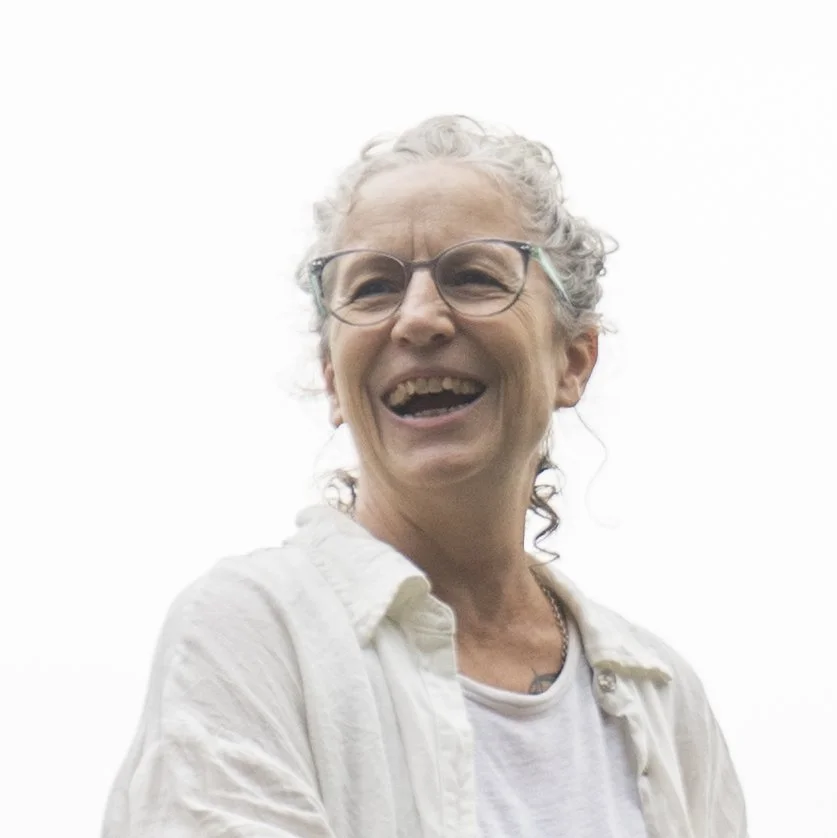
Heidi Barr/ Co-Founder & CEO of PA Flax Project/ Philadelphia, PA
Heidi Barr shares the story of launching the PA Flax Project and the work of rebuilding a long-lost regional textile industry from the ground up. Her talk traces what it takes to bring flax from field to fiber at scale—centering cooperative ownership, farmer viability, and the infrastructure required to support a domestic linen economy. As the project moves toward becoming the first regional-scale flax mill in North America, Heidi offers a grounded look at what “scale” truly means for land, labor, and community.
About Heidi: Heidi Barr is the co-founder and CEO of the PA Flax Project, a cooperative working to revive flax for linen production in Pennsylvania and rebuild a regional textile industry from field to fiber. For over a decade she operated a lifestyle brand at the intersection of food and fabric, deepening her understanding of the connections between farming, textiles, and design. Her passion for natural fibers and environmental stewardship drives her work to establish new infrastructure and a domestic linen future that benefits farmers and communities alike.
Instagram: @paflaxproject
Website: paflaxproject.com
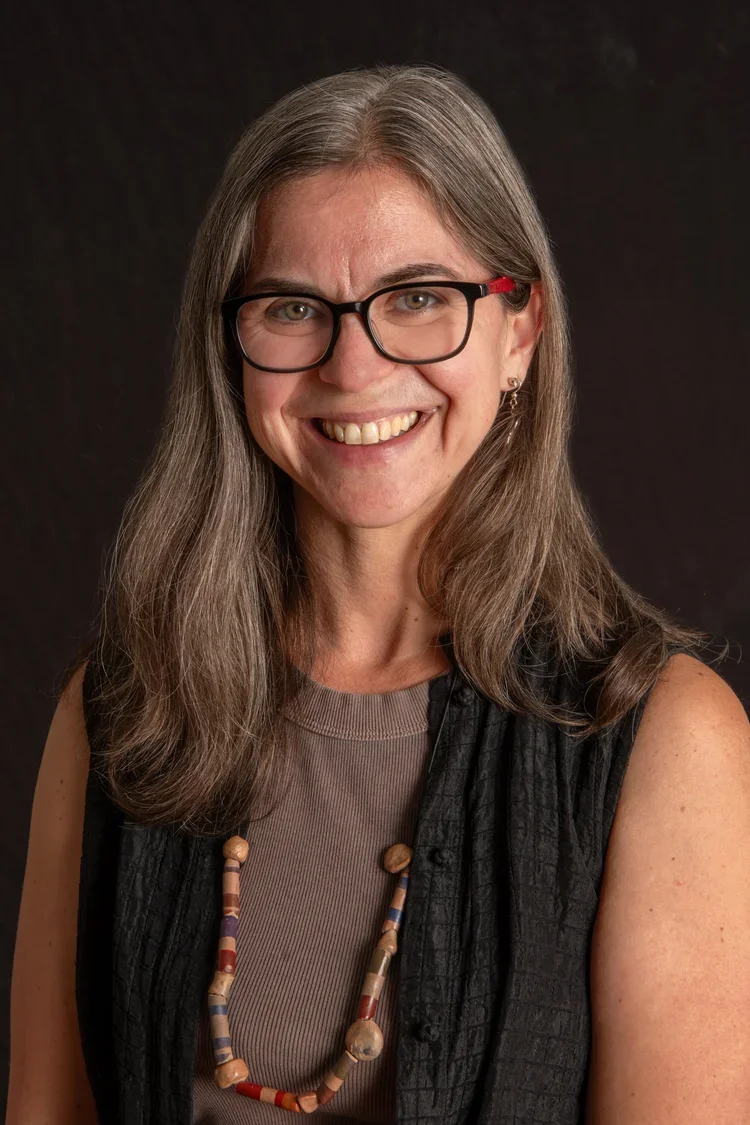
Jess Pinsky/ Founder and Executive Director of Praxis Fiber Workshop/
Cleveland, OH
Jessica Pinsky will share how Praxis Fiber Workshop’s indigo program has evolved over the past eight years through deep collaboration with local neighbors, artists, and community partners. The talk traces how indigo has become both a shared resource and a catalyst for education, environmental responsibility, and relationship-building, demonstrating how place-based textile work can shape a more connected and sustainable future.
Bio
Jessica Pinsky grew up in Akron, Ohio, and moved to Cleveland in 2011 after earning a BFA in Studio Art from New York University (2006) and an MFA in Painting from Boston University (2009). Her artistic practice bridges painting and weaving, and she is represented by Hedge Gallery in Cleveland, Ohio. In 2012, Jessica collaborated with the Cleveland Institute of Art to establish Praxis Fiber Workshop in response to the closure of CIA’s fiber arts department. She currently serves as Executive Director of Praxis, where she leads the organization’s mission to educate and cultivate a contemporary fiber arts community. Learn more at www.jessicapinsky.com.
Praxis
Praxis Fiber Workshop is a 501(c)(3) nonprofit arts organization located in Cleveland’s Waterloo Arts District. Founded as the relocated fiber arts department of the Cleveland Institute of Art, Praxis has grown into a vibrant community hub for contemporary textile education and practice. Praxis builds an international network of fiber artists and makers through classes, workshops, residencies, and collaborative projects that demonstrate how fiber arts can foster creativity, sustainability, and inclusive community building.
Praxis also advocates for environmentally responsible textile practices, linking local initiatives to the global textile field. Its gallery presents contemporary fiber art from artists across the country, expanding public engagement with traditional craft while championing innovation and technology-driven practices. By honoring the history of fiber while embracing its future, Praxis is emerging as a global center for textile innovation. Learn more at www.praxisfiberworkshop.org
.
Instagram: @praxisfiberworkshop
Website: praxisfiberworkshop.org
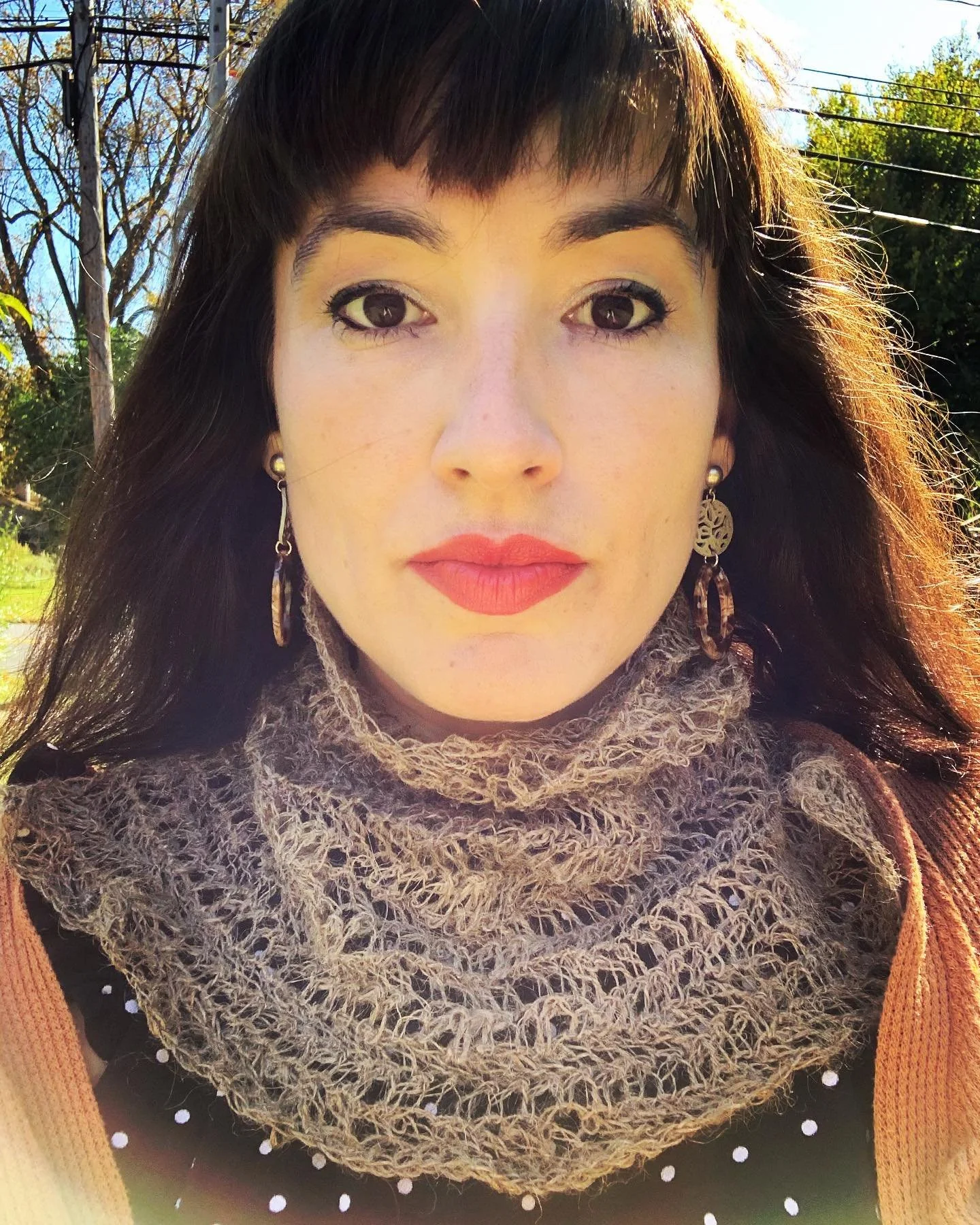
Kat Novak/ Professor at KSU School of Fashion/ Akron, OH
Kat Novak will open our second segment and briefly discuss her perspective as both a Rust Belt Fibershed community participant + Student Ambassador Liaison at Kent State, then will introduce our Student Ambassador: Cate McNamara.
About Kat: Kat Novak is a professor at the Kent State University School of Fashion where she currently runs the TechStyleLAB and teaches Fabrics. Her personal work is on the balance between technology and hand made that is reflective of often overlooked communities.
instagram: @orchardhouseakron
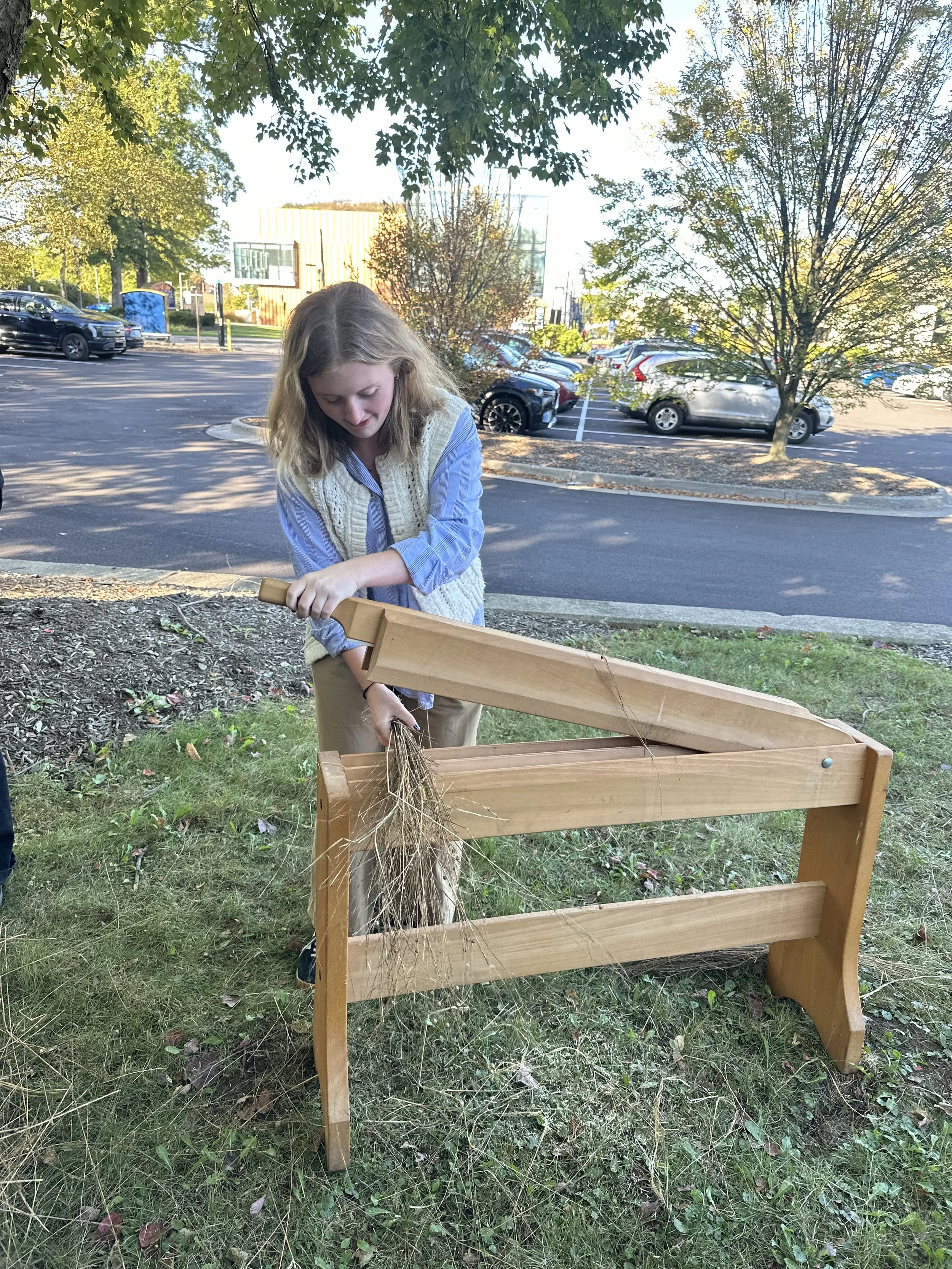
Cate McNamara/ President of RBF Student Ambassador Program / Kent, OH
Cate will discuss about the importance of involving students in the movement for a more sustainable future and their importance in our community. With her experience in the Student Ambassador Program, she has seen students across disciplines come together to form a community. They have demonstrated great interest in creating a future that uplifts local economies and benefits our ecosystem, which sets the foundation for a hopeful future.
About Cate: Cate McNamara is the Co-President and a founding member of the Rustbelt Fibershed Student Ambassador Program at Kent State University. She is a senior at Kent State with double majors in Fashion Design and Merchandising. She is a strong believer in the importance of education in the effort to create a future that is better for our planet.
instagram: @rbfibershed_students
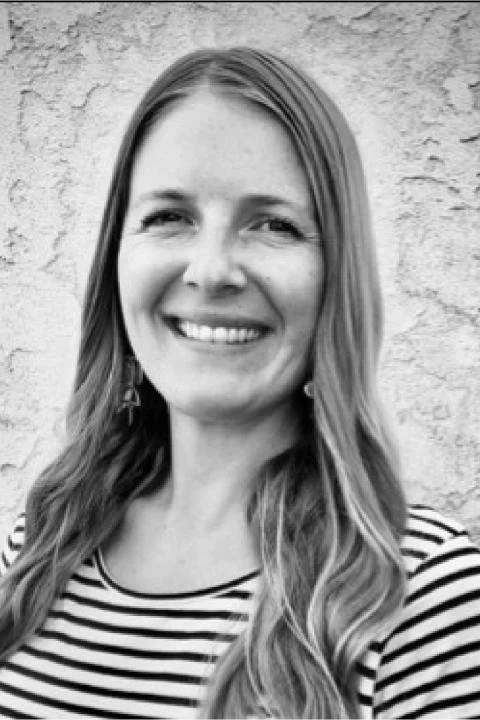
Britta Bielak/ Professor at KSU, co-founder Okom Wrks /
Kent, OH
Britta Bielak explores the creative and regenerative potential of unconventional materials. Drawing from her research and design work with mycelium-based furniture and interior systems, Britta challenges dominant ideas about waste, value, and permanence in the built environment. Her work invites us to reconsider what materials we build with and how design can actively participate in ecological cooperation rather than extraction.
About Britta: Britta Bielak is a designer, educator, and artist whose work centers on interdisciplinary approaches to today’s environmental and social challenges. She is the co-founder and VP of Design at okom wrks labs, PBC, a regenerative design company developing the first structural mycelium-based composite as a 1:1 replacement for lumber in the built environment. Britta continues to research interior applications of this technology at Kent State University, while teaching and mentoring the next generation of regenerative design practitioners.
Website: www.okomwrks.co
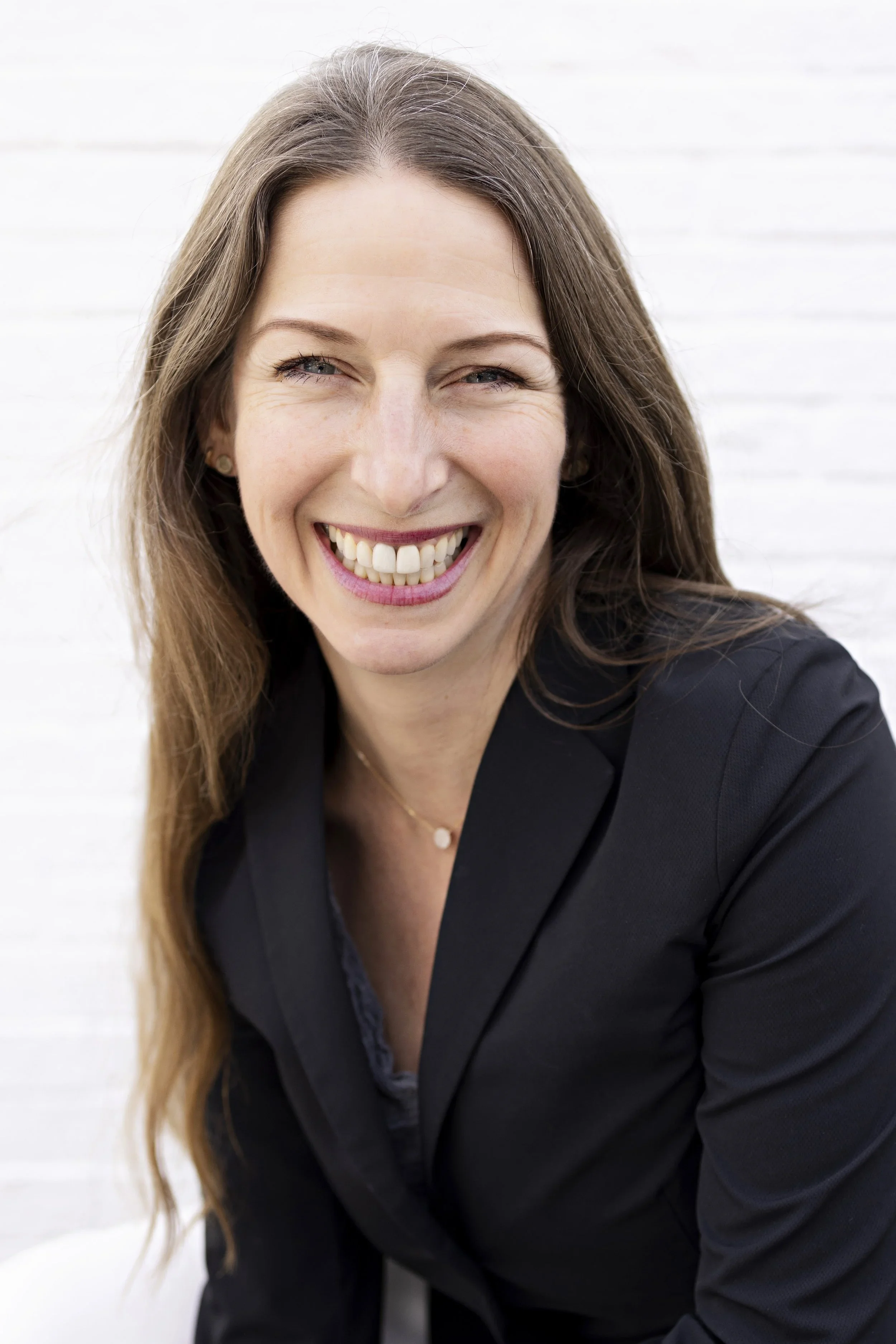
Lisa Goldsand/ Founder, Circular Thrift/ Columbus, OH
A Cautionary Tale—and a Path Forward for End-of-Life Textiles
Lisa Goldsand will address the challenges of managing textiles at the end of their life, including why most textiles still end up in landfills and where current systems fall short. Drawing on lessons from a Central Ohio textile collection pilot conducted in summer 2025, she will share emerging solutions and practical insights for building more responsible, regional pathways for reuse, remanufacture, and fiber recovery.
About Lisa:Lisa Goldsand is the founder of Circular Thrift and a nationally recognized expert on textile waste and circular fashion systems, with over 30 years of experience working inside the global fashion industry. After witnessing firsthand the environmental and social impacts of large-scale apparel production, she shifted her focus to building local, place-based solutions that address textiles at their end of life. Based in Central Ohio, Lisa led the region’s first textile collection pilot in partnership with SWACO, exploring how municipalities can responsibly divert textiles from landfills.
Through Circular Thrift, Lisa’s work centers on shifting consumer behavior at a hyper-local level by reconnecting people to the value of the materials they already own. Her initiatives include community clothing exchanges, mending and repair workshops, and public education on reuse, remanufacture, and fiber recovery. She is particularly interested in the remanufacturing space as a critical bridge between reuse and recycling, and in building regional systems that keep textile resources circulating within local economies rather than becoming waste.
Instagram: @circularthrift
Website: circularthrift.org
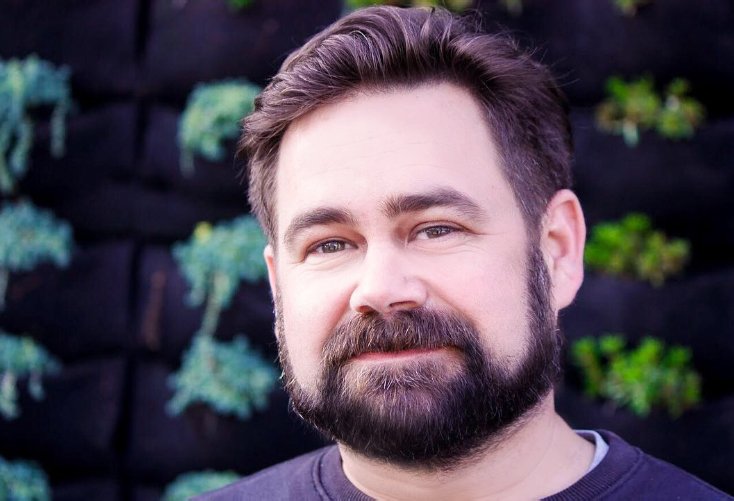
Christopher Mauer/ redhouse studio / Cleveland, OH
Regenerative Architecture and Circular Textile Systems:
Christopher Maurer will be speaking about the use of living material systems as a remediative strategy for addressing post-consumer textile waste. He will share recent collaborative experiments with the Rust Belt Fibershed and Goodwill that investigate how biological processes can break down dyes and fibers in spent clothing and return those materials to productive use. The work points toward locally grounded, circular material pathways that repair environmental harm while extending the life of textile resources.
About Christopher: Christopher Maurer is an architect, inventor, and founder of redhouse studio, a Cleveland-based practice advancing regenerative architecture through fungi-based materials, environmental remediation, and community-centered design. His work spans research, public art, and built prototypes developed in collaboration with universities, NASA, and local partners, with a focus on turning waste streams into carbon-storing building systems. He is motivated by the belief that architecture can be a catalyst for ecological repair, local economies, and new cultural narratives rooted in place.
Instagram/Linkedin: @redhousestudioarchitecture
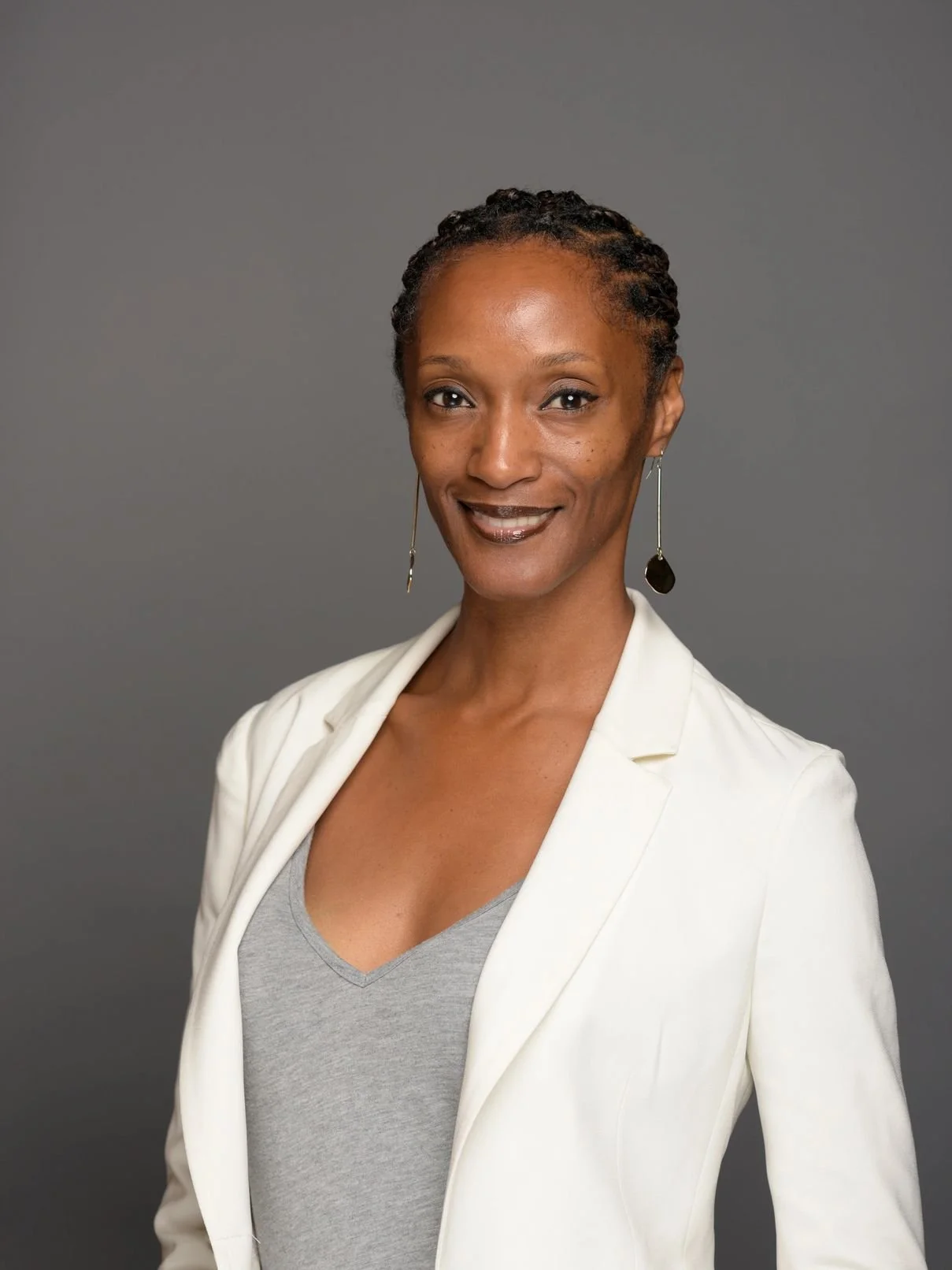
Caressa Brown/ Owner and Director of
(DE-FI) / Dayton, OH
I will be sharing about building place-based textile systems that reconnect land, labor, and creativity, with a focus on how collaboration across agriculture, education, and manufacturing can shape more resilient regional economies. Drawing from my work with (DE-FI) Global INC™, I will explore what it means to be a good ancestor in the textile space by investing in responsible systems, community knowledge, and long-term infrastructure rather than extractive or trend-driven models. The talk centers on imagining a textile future rooted in care, stewardship, and collaboration close to home.
About Caressa: Caressa L. Brown is the Owner and Director of (DE-FI) Global INC™, a Midwest-based fashion and textile ecosystem designed to rebuild the apparel industry through education, workforce development, responsible production, and community-rooted systems. Operating across Dayton and Cincinnati, (DE-FI)® integrates agriculture, STEM, fiber systems, design, manufacturing, retail, and entrepreneurship to create real career pathways from soil to runway.
With more than a decade of experience spanning higher education, nonprofit leadership, and creative industry development, Caressa brings a systems-level approach to fashion that prioritizes infrastructure over spectacle and sustainability over short-term trends. Her background includes senior leadership support in higher education, program development, grant writing, recruitment, and regional economic alignment, with a consistent focus on expanding access for underrepresented communities.
Under her leadership, (DE-FI) Global INC™ has launched designer and model incubators, workforce training initiatives, micro-manufacturing support, and education-driven fashion weeks that center business development, technical skill, and long-term viability. Her work challenges traditional fashion narratives by emphasizing textiles as both cultural artifacts and industrial systems, connecting land use, material science, labor, and creative expression.
Caressa has contributed to national and regional fashion initiatives, including service through the CFDA Connects program, behind-the-scenes work at New York Fashion Week, and collaboration with educators, fiber growers, manufacturers, and sustainability advocates across the Midwest. She is also active in civic leadership, serving on local boards and committees focused on zoning, education, and community preparedness, further grounding her work in place-based impact.
Her perspective is shaped by lived experience, community care, and a belief in stewardship across generations. Rather than positioning fashion as a luxury disconnected from reality, Caressa frames it as a tool for economic resilience, cultural storytelling, and responsible innovation. Through (DE-FI), she advocates for being “a good ancestor” by building systems that honor the past, serve the present, and leave meaningful infrastructure for the future.
Instagram: @Defiglobalinc @DefiantlyCaressa
Website: Defiglobalinc.com
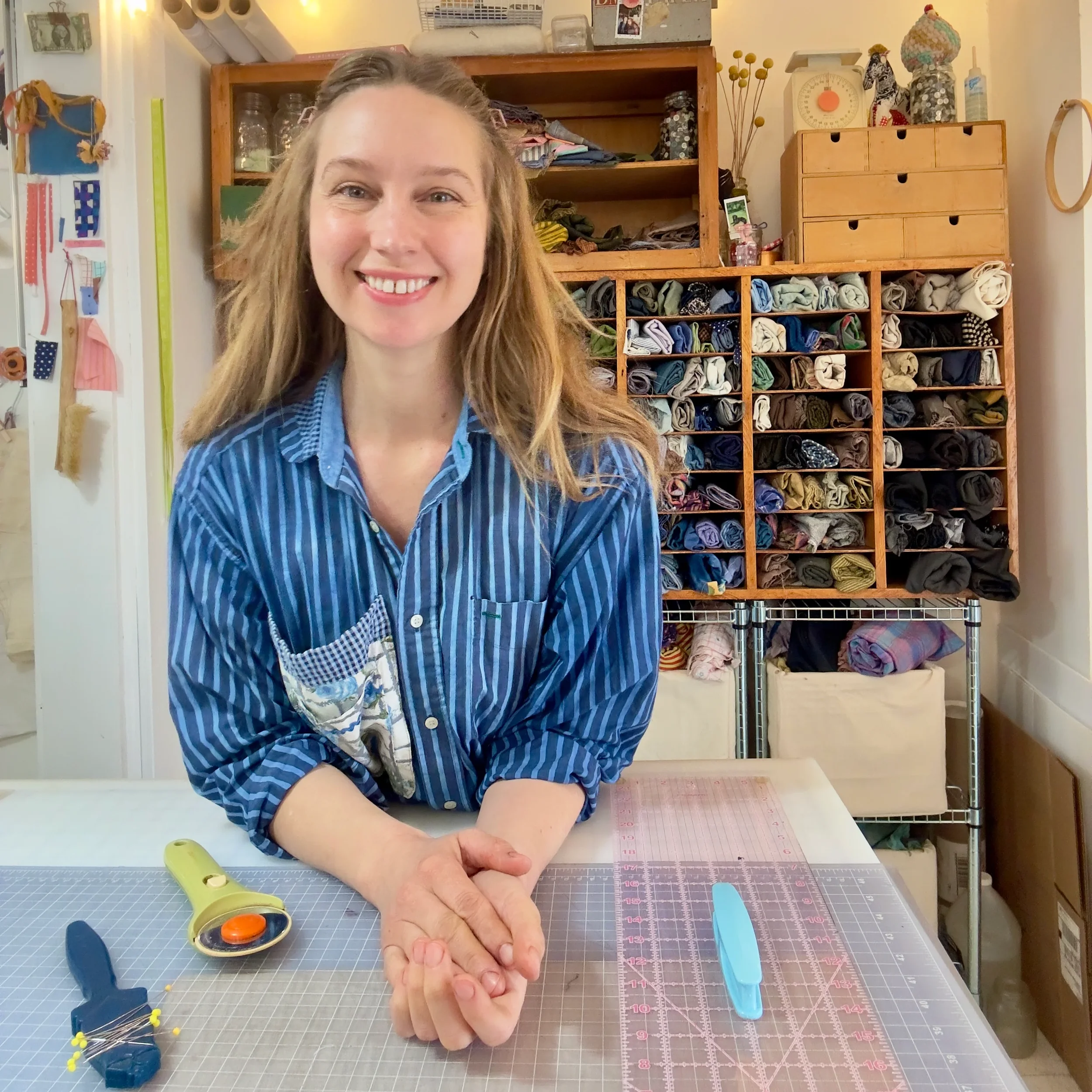
Rebekah Joy/ Flux Bene/ Pittsburgh, PA
Rebekah will share how her work with Flux Bene reimagines waste as material for artistic expression and everyday wear, and how creativity becomes a tool for sustainability in textile systems. She’ll share insights into the joys and challenges of minimal-waste design, the power of community participation, and why upcycling is practice that reshapes how we value what we already have.
About Rebekah: Rebekah Joy is a textile artist and pattern maker based in Pittsburgh, PA, and the founder of Flux Bene, a zero-waste clothing and textile recycling project focused on upcycling and thoughtful design. Her work blends artistic craft with sustainability, creating one-of-a-kind garments and patterns that encourage reuse and creative engagement with materials. Through Flux Bene she aims to facilitate the reuse of thousands of garments and inspire a broader community to rethink fashion and waste.
Instagram: @flux.bene
Website: fluxbene.com

Sarah Pottle & Jess Boeke / Co-Founders, Rust Belt Fibershed / Medina & Peninsula, OH
Sarah and Jess will share about co-creating a textile future worth making.
About Sarah and Jess:
Cleveland born and raised, doing life together since womb-times, we found ourselves as public school teachers in Baltimore in the mid 2000s, working on organic farms in the summer, and looking for a creative side project. We started Drift Lab Dye Studio, a natural dye project, in 2010. In the process of Drift Lab unfolding, we became familiar with fellow natural dyer and founder of Fibershed, Rebecca Burgess. We remember the first Fibershed video we saw on this-new-platform-called-instagram where the panelists were talking not just about fiber, but about farming and ecology and health and fair trade and art and fashion and climate and economy and education and we instantly thought: THAT’S IT! THAT’S THE THING. So when we moved back home to settle in Cleveland in 2014 (Jess) and 2016 (Sarah), we felt compelled to promote the Fibershed movement in our home bioregion.
In 2018 the Rust Belt Fibershed was born, and in 2022 we finally became a 501(c)3. This project and movement have flourished in the most unpredictable and abundant ways, and we are truly grateful to be a part of it.
As co-founders of the Rust Belt Fibershed, we are truly just looking for ways to facilitate creative connections among people and planet. We have decades of experience in teaching, leading, learning about and through food and textiles, and challenging the existing extractive systems with abundant participation and philosophies of “more life”!
We are still naturally dyeing textiles through our project Drift Lab Earth, where we host workshops educating on place-based systems through local color and are excited about our other joint current art projects, like We Are Verbs and Field Guide.
Websites: rustbeltfibershed.org , Driftlab.earth and weareverbs.earth , and fieldguide.earth
The morning speaker series will culminate with the One Year, One Outfit fashion show, followed by time to connect, participate, dream up, and snack before we head upstairs for Vendors, Learning Stations, Clothing Swap, and more!
For full agenda and details, please see the main symposium page.